Image Credit: Netflix
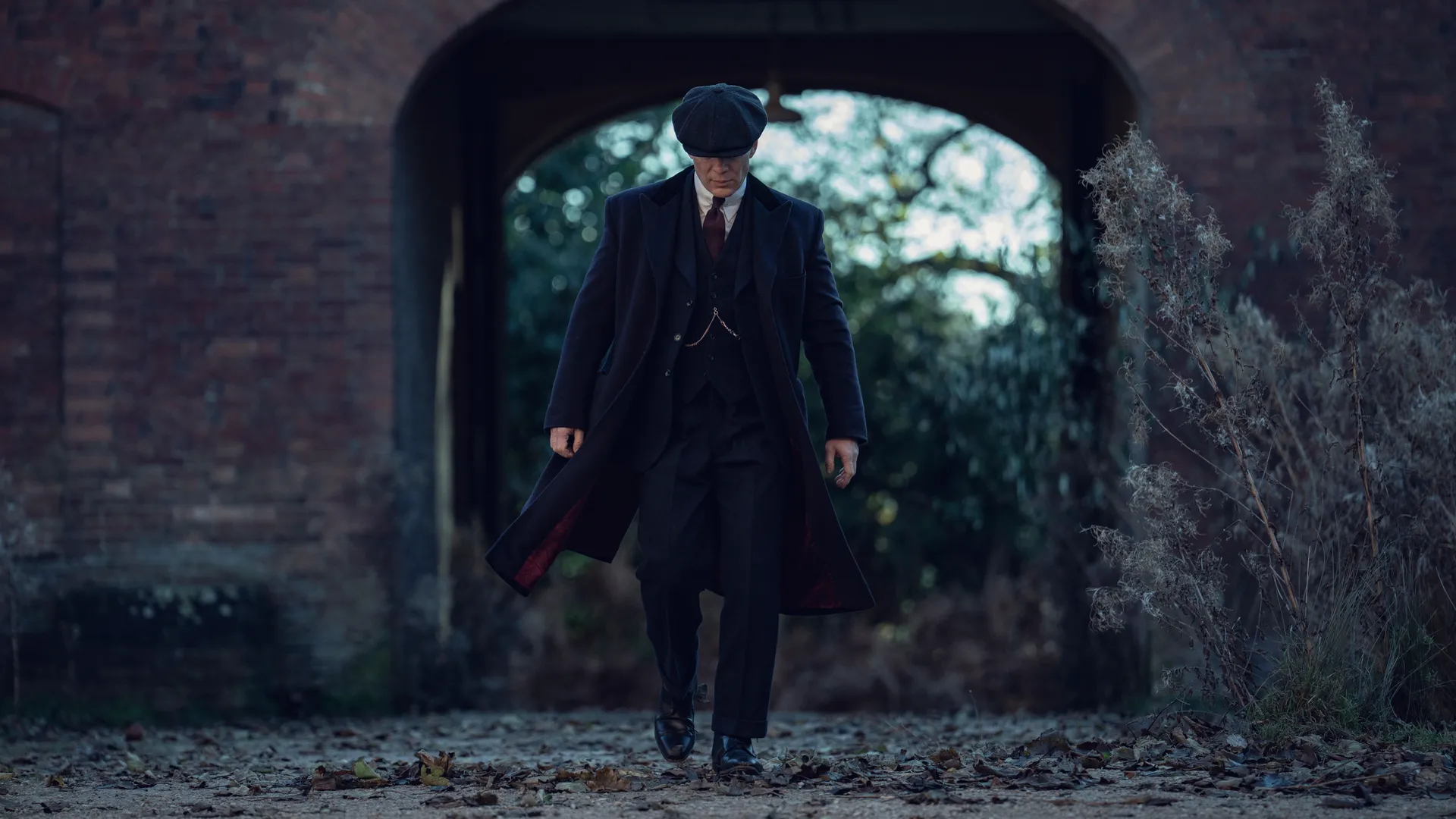
“In the bleak midwinter”—the Shelby brothers of Peaky Blinders often repeat this line from Christina Rossetti’s poem over the course of six seasons. And it is on the cusp of the coldest season, in the final days of November 1940, that the criminal career of Tommy Shelby, the undisputed leader of Birmingham’s underworld, comes to a definitive end. His original farewell actually dates back to the end of the sixth season, which concluded the British series created by Steven Knight, when the reins had passed to his son Duke.
Peaky Blinders: The Immortal Man, the film marking his—brief—return (four years after the series finale), is both the final farewell of actor Cillian Murphy (as an actor, though he will return as a producer) from what we undoubtedly consider one of the greatest series of all time, and the beginning of a new era: not only because it crowns the new Rom Baro—the new king of the Gypsies—but because the film serves as a watershed between the cult classic and the sequel set in the 1950s, which, according to Netflix, has just gone into production. It’s not the only one in the works; there’s talk of a Boston spinoff and a Polly prequel, but to understand whether this is bad news or just bad news, we need to go back to Immortal Man.
After six flawless seasons, Tommy Shelby—a World War I veteran suffering from PTSD who had ruled Birmingham’s underworld with an iron fist—bid farewell to his criminal life: he met a symbolic death, literally burning the symbol of his old life and leaving it behind, after discovering that the only one capable of eliminating Tommy Shelby was Tommy Shelby himself. It seemed like the final chapter of the saga, an ensemble saga with a central protagonist haunted by a thousand demons. War, bereavement, betrayal, and addictions to alcohol and drugs had devoured the Shelby brothers, swallowed up by despair and guilt, teetering between suicidal tendencies and self-destruction, between a desperate search for danger and an escape from a Camusian existential void that they soothed with violence and murder.
The Shelbys were the kings of Birmingham in the interwar years, a time when their ventures intersected with politics and corruption, fascism and Nazism. When Tommy Shelby returns in Immortal Man, he seems to have left all that behind. Shut away in a huge, empty mansion falling apart like a modern-day Miss Havisham (Knight is a huge Dickens fan), he lives haunted by memories of his sins and the ghosts of lost loved ones. Among his most painful regrets is the abandonment of his son, a boss said to be even more ruthless and amoral than he is.
The shadow of Nazism looms over Immortal Man, because Duke has Nazi ties and is linked to Operation Bernhard through a certain Beckett (Tim Roth), who exploits the young man’s loneliness, anger, and the trauma of his father’s rejection to manipulate him. The entire film is a web of cycles and recurrences, of traumas and sins, guilt and superstitions, and recurring visions. It’s not so strange, then, that it is the ghost of Duke’s mother who urges Tommy to return to help him, because the Shelbys are gypsies who have always believed in omens, curses, and the dead returning.
Whether it’s a real spirit or mere suggestion doesn’t matter. Even the final loss Tommy will suffer is preceded by a vision. In Peaky Blinders, it is often said that the Shelby family’s strength lies in their family: brothers, aunts, nephews, legitimate and illegitimate children—a dynasty living in symbiosis through thick and thin. Tommy abandoned them, but when he is truly left alone (Arthur was written out of the script due to personal issues with his portrayer, Paul Anderson; Ada is there, but not for long), that disowned son becomes the last relative to cling to.
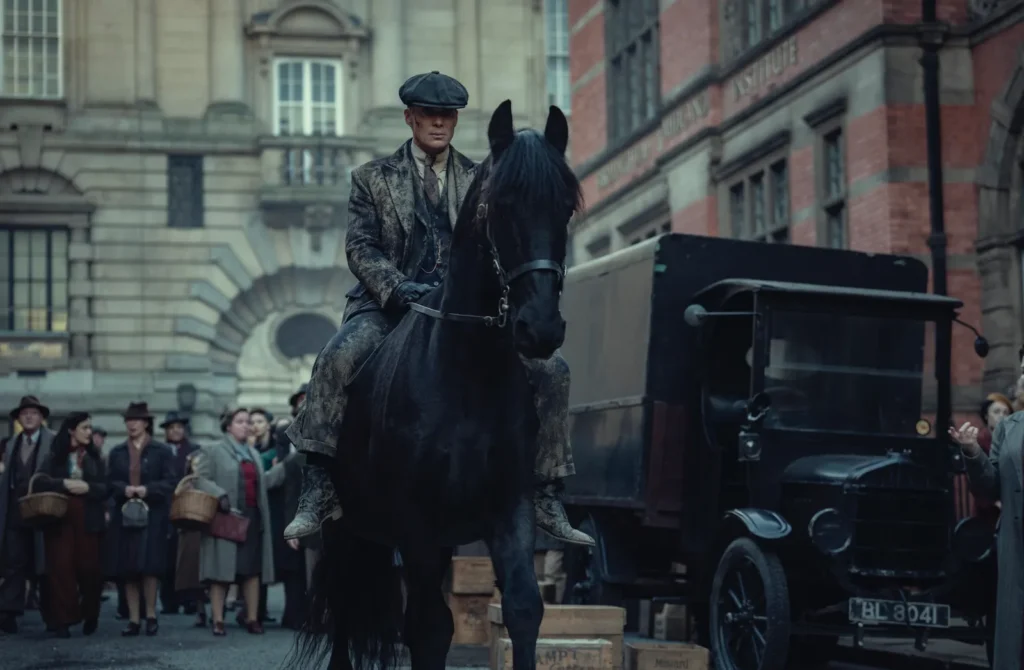
Like a superhero, Tommy dusts off his Peaky Blinders costume, jumps into the Bentley, and heads to Birmingham to reclaim his role as the Rom Baro, seek revenge, and save Duke. As he rides through the city streets on horseback—just like in the series’ opening scene—he’s greeted like a star by his fellow citizens. At that moment, he reminds us of his superpower: he’s a villain, but most see him as a hero. His return to the Garrison pub, where he reestablishes his authority with grenades (later he’ll drive the point home with an upgrade: landmines) is epic, and after a first half of the film that’s incredibly dark, heavy, and frankly exhausting to watch, the final twist of his story makes us wonder if perhaps we still need Tommy Shelby, and the bleak, desolate Birmingham immortalized by consistently stunning cinematography and a consistently mesmerizing soundtrack. But do we still need the Peaky Blinders? Or rather, a new generation of them? Since the crown passes, this time definitively, to Duke, it’s inevitable to wonder if, without Tommy, Arthur, Polly, and Ada, we still want to hear from them. Tough and ruthless, yet fragile and hungry for affection as only someone rejected by a father or mother can be, can Duke make us long for their return?
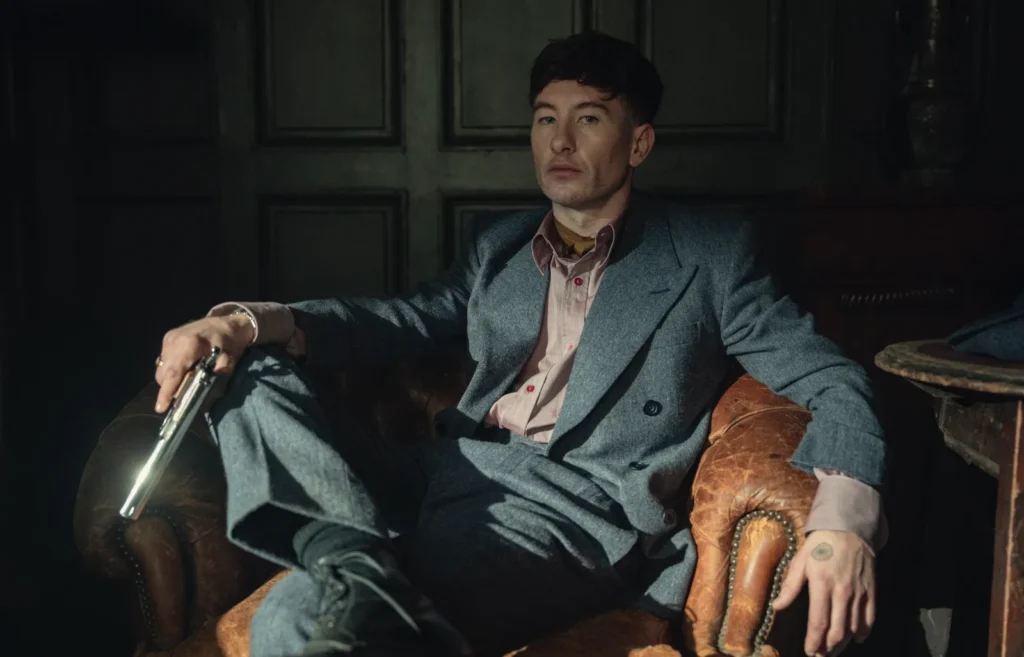
Barry Keoghan, who—like Cillian Murphy—is also Irish and equally talented (he proved it by breaking our hearts with that scene in The Spirits of the Island) has an incredibly difficult task. In the film, he has Murphy’s full lips, large blue eyes, and square jawline, which make Duke look more like Tommy (much more so than his predecessor, Conrad Khan. Side note: we thought it was all thanks to the makeup, but the Saltburn actor has permanently altered his appearance, and that seems a bit extreme to us, even if it’s in the name of art). However, Duke is not, and never will be, the new Tommy—and that’s for the best.
One of the greatest characters ever created for the small screen, an immense villain with a heart of darkness, is not someone to compete with or emulate. For now, speaking of heirs, the only one we can be sure of is musician Grian Chatten, who follows in Nick Cave’s footsteps by composing a soundtrack featuring original tracks and some of the most beautiful covers ever created for television. The final verdict: for us, the farewell to Peaky Blinders remains the one with Tommy Shelby riding away on horseback, leaving the burning gypsy wagon behind him. However, we’ll hardly be able to ignore its new iterations.
About the Author