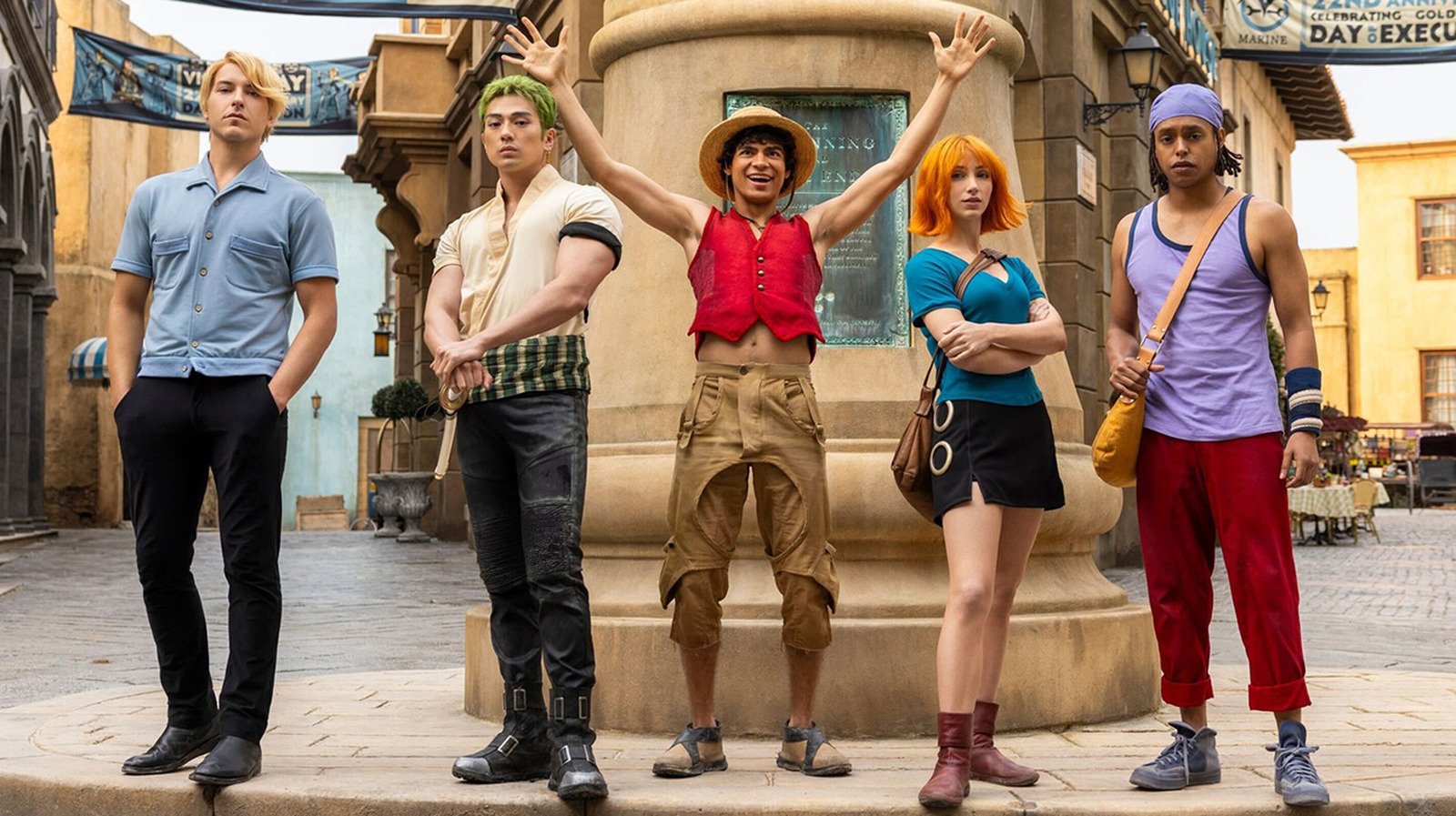
Image Credit: One Piece
Watching the entire second season of One Piece: Great Voyage in one sitting, it’s hard not to think about how the exact same approach was taken with Cowboy Bebop and how different the results turned out: one a huge success, the other a failure. The new episodes of Netflix’s live-action adaptation of Eichiro Oda’s manga are even more spectacular, exciting, and over-the-top than the first. Above all, it has an even bigger heart, and that is the main difference from Cowboy Bebop. Packed with Easter eggs and passionately faithful to the source material, the second season of One Piece, overseen by showrunners Matt Owens and Steven Maeda, keeps fans of the long-running pirate adventure on a pedestal.
The eight episodes that make it up would be memorable even just for their spectacular nature: the streamer’s production is monumental, and it’s an adaptation that just a few years ago—not only due to production efforts but also due to actual technical limitations—would have been impossible to realize, but thanks to CGI, a lot of money, and an exceptional team of set builders, costume designers, makeup artists, hair stylists, and special effects experts—offers an immersive dive (yes, we’ll keep making marine or pirate-themed analogies) into Oda’s wild imagination.
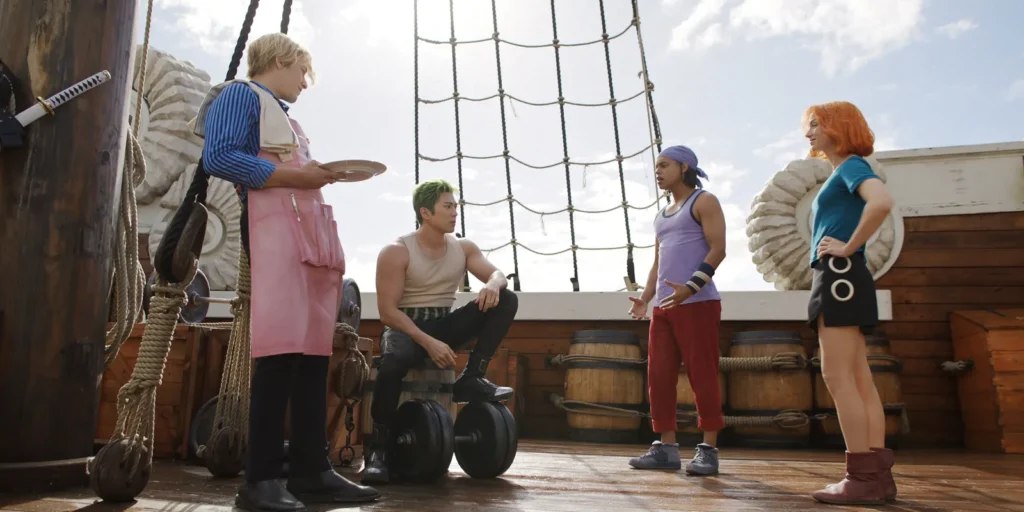
The fundamental aspect—and what sets it apart from its predecessor, Cowboy Bebop—is respect: the essence of Oda’s work, its celebration of diversity and uniqueness, is carefully preserved by the series’ producers; it is the treasure, the show’s priceless “One Piece.” The fact that the aforementioned team managed to recreate the makeup and hairstyles, costumes, and weapons while striking the right balance between fidelity to Oda’s vision, realism, and practicality is the miracle that made it all possible. But let’s take a step back.
The first season introduced Luffy’s crew—who they were, how they came together, and their mission: to hunt for the treasure of the Pirate King, Gol D. Roger. The defeat of the pirate Alvida, the clown Bagy, and the fish-man Arlong, along with the encounter with Vice Admiral Monkey D. Garp in the introductory episodes, brings fame—and his first substantial bounty—to the straw-hat pirate. The second season follows the crew’s adventures as they sail the Going Merry toward the Grand Line, a route dotted with bizarre islands, characterized by natural laws that defy physics, and governed by unstable weather conditions and terrestrial magnetism.
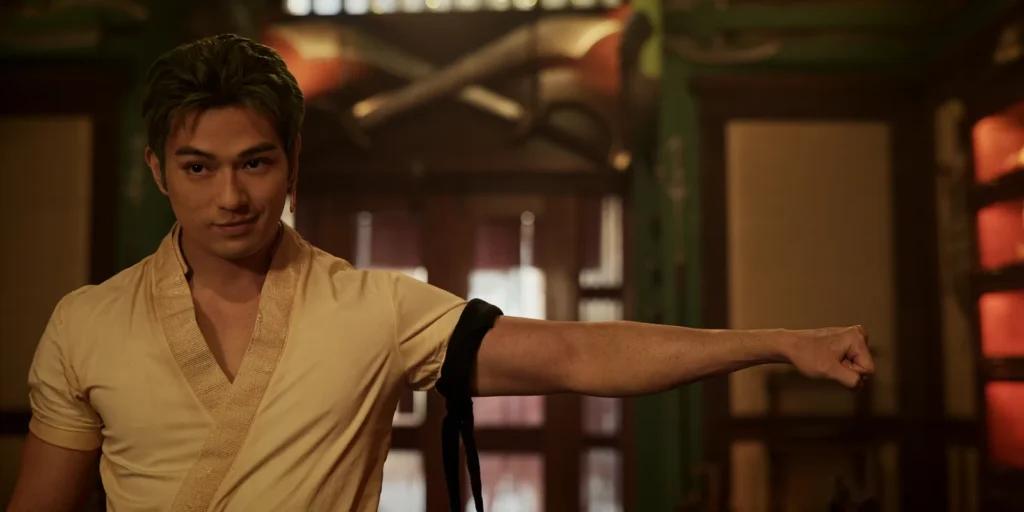
With the Navy already hot on their heels, the pirates must face off against agents of the subversive criminal organization Baroque Works, many of whom, like Luffy, have acquired special abilities after eating a Devil Fruit, while Luffy and his crew help Princess Vivi save the kingdom of Alabasta from civil war. The eight episodes flow beautifully because, alongside an impeccable technical and artistic ensemble, there is an enthusiastic and passionate cast, united by a tangible camaraderie and harmony.
In particular, Taz Skyler (Sanji), who, with maniacal dedication, achieved extreme physical conditioning to film nearly all the fight scenes without a stunt double, and Mackenyu, the Japanese-American son of the legendary Sonny Chiba and a fan of Oda’s work, who, alongside Zoro, has truly found his perfect alter ego—having previously lent his likeness to various other comic book characters such as Rurouni Kenshin, Saint Seiya, and Fullmetal Alchemist. We can’t imagine the sense of satisfaction Mackenyu must have felt after filming the Battle of Loguetown, when Zoro takes down the hundred members of Baroque Works.
The second season manages to capture the spirit of Oda’s immense saga even better. It embraces the essence of its visceral extravagance, the yearning for self-fulfillment, the desire for adventure, the importance of friendship, and the dedication to selflessness. The fight choreography is meticulous and hyperkinetic, and every single one of the fantastic characters created by Oda is faithfully brought to life from the pages of the manga. One suspects that the casting for One Piece is a treasure hunt in itself, a search for the faces that best suit the diverse cast of characters that make up such a vast roster.
A special mention must be made of Chopper, introduced during the Tudum event with the intent of testing the audience’s reaction to a character theoretically unsuitable for a live-action adaptation. However, the adorable talking reindeer manages to pass the test of the three-dimensional transition, not so much because his live-action version is perfect, but rather because of the irresistible sweetness and undeniable love the creators have poured into his portrayal.
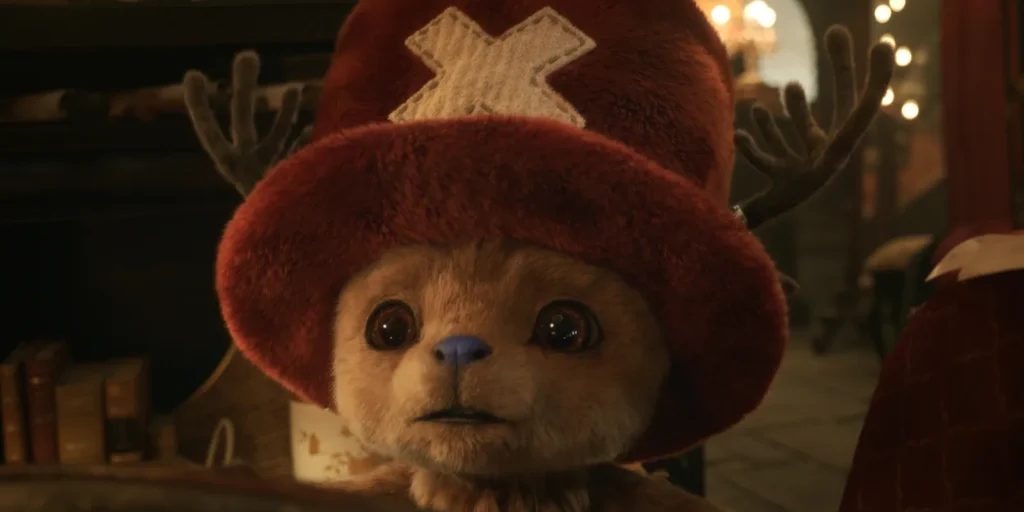
The most adventurous and the most touching episodes are written or directed by women, such as the episode dedicated to Laboon and the one that recounts Chopper’s story in a flashback. One Piece is at its best when Luffy’s big—and incredibly resilient—heart, the organ that governs all his decisions, drives him to protect and help those who have been abandoned or are in trouble, whether it’s a trapped whale, a lonely princess, or a talking reindeer.
Anyone who loves—like this writer—pirate stories won’t be used to stumbling upon a grand pirate adventure where the number one quality of its characters is kindness, and this is another reason why One Piece is so special. Some episodes foreshadow the arrival of characters we’ll see later on—sometimes giving them more prominence than those who, chronologically, are introduced earlier in the comics—and if your reading of the manga (or viewing of the anime) dates back two decades, you risk racking your brain trying to remember them, which might ruin the experience. In that case, my advice is to simply go with the flow and enjoy this spectacular entertainment without overthinking it.
About the Author